


Currently, customers purchase Energy Attribute Certificates (EACs) from an international registry to offset their business' carbon emissions on the GoNetZero platform. However, this process is largely manual and requires the GoNetZero Operations team to assist customers in managing their accounts within the registry and handling the offsetting process.
1. Manual process: Customers are reliant on manual assistance for managing their EACs and carbon offsets.
2. Inefficiency: The current system is inefficient and time-consuming for both customers and the GoNetZero Operations team.
3. Human error: The manual nature of the process increases the likelihood of mistakes or inaccuracies.
4. Fragmented experience: The customer journey is not streamlined, leading to a disjointed and potentially frustrating experience.
5. Need for integration: A centralized, secure, and self-service platform for customers to manage the entire offsetting journey independently.
Having an integrations page should help customers to provide convenience, save time, reduce human error, increase transparency, and gives customers additional reason to choose GoNetZero over other competition.
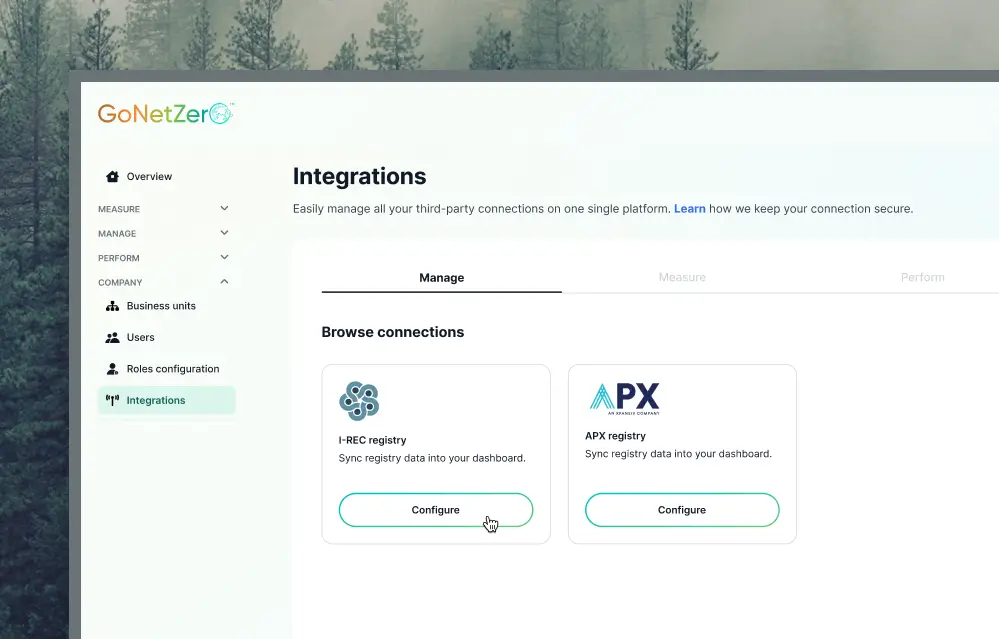
As the lead designer designing this integration, I conducted research, gathered requirements, did UX writing, worked closely with, and had reviews with the team and stakeholders, to iterate the designs.
1. Given a brief user story, gather requirements.
2. Understand who the users are, and the current process.
3. Research for the best practice.
4. Draft user flow.
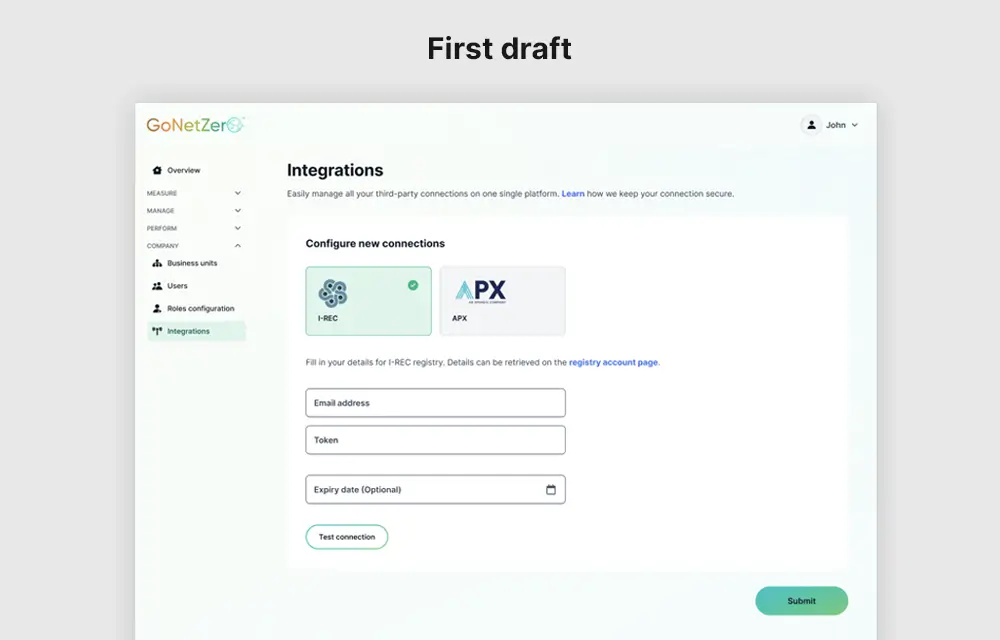
5. Designing and prototyping.
6. Review with stakeholders and iterate.
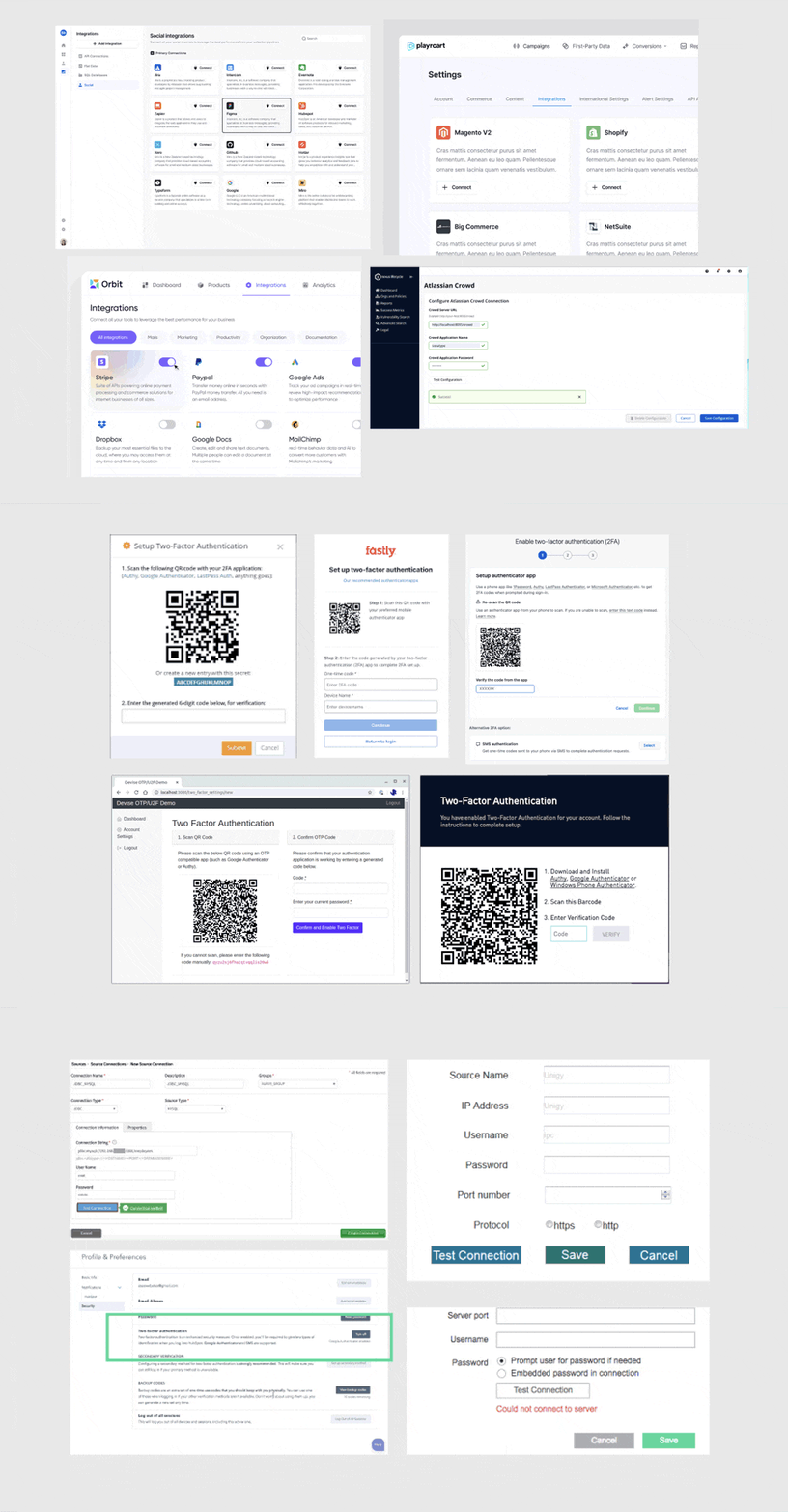
I needed to design in a way that enhances trust and assures customers that the integration will be secure and error-free. These included:
1. Adding official logo of connections.
2. API access keys.
3. Introducing 2FA authentication.
4. Requesting for access.
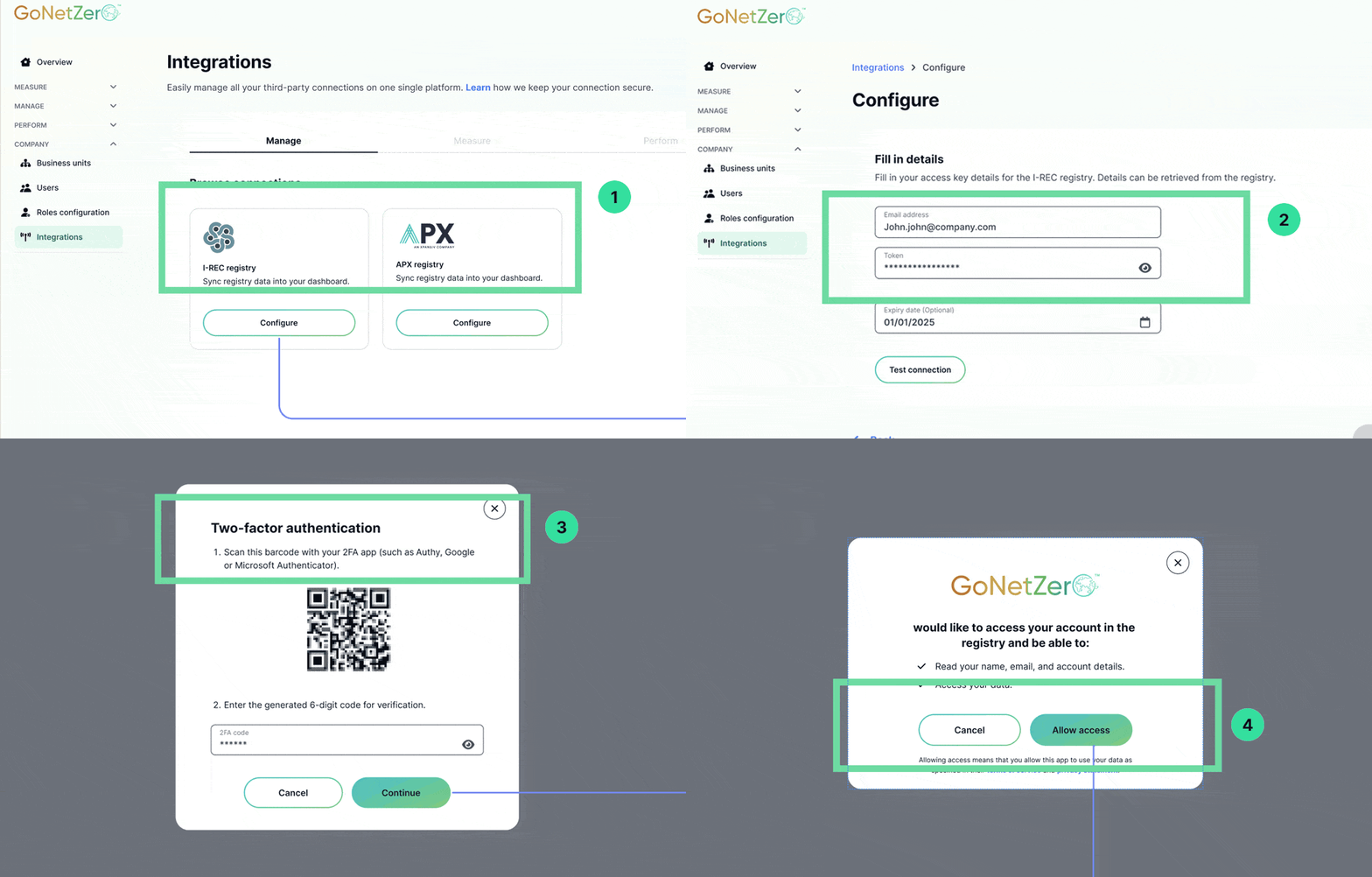
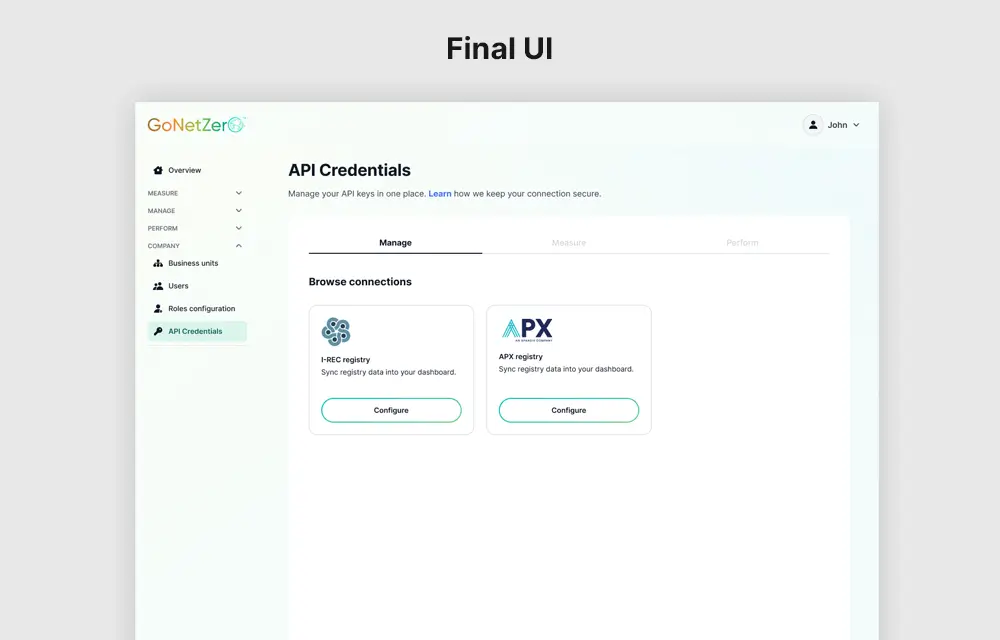
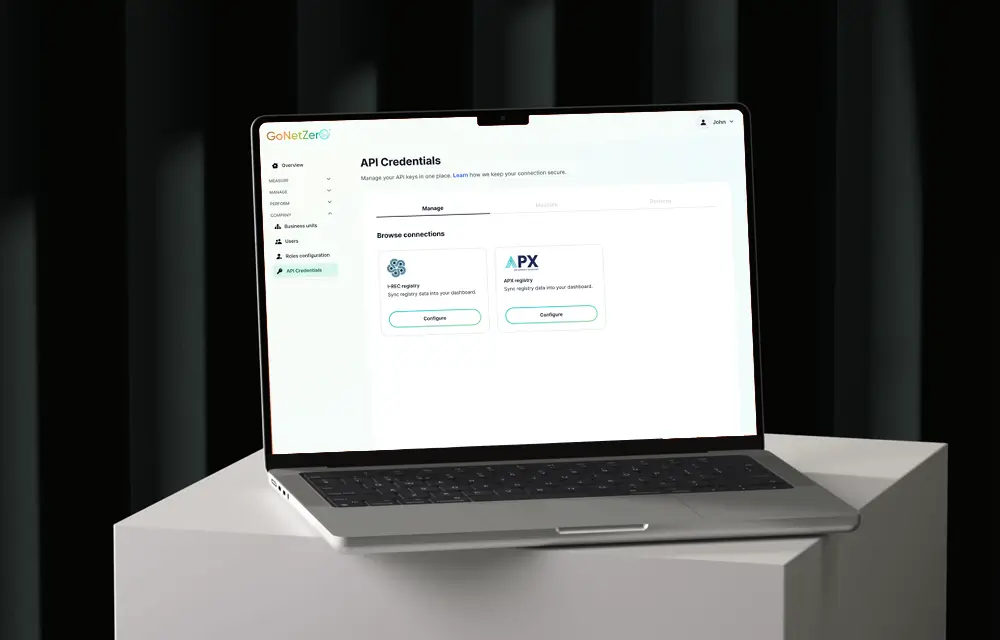
The most enjoyable part of the design process was applying behavioral science to actively build trust throughout the user journey. By designing with an understanding of how people interact with digital systems and what makes them feel confident, I was able to create a more intuitive and secure experience for the customers.
One important lesson I learned was the value of designing for scalability, even when the focus was on immediate needs. While the Product Manager wanted to prioritise the present, I designed in such a way that it could be scaled easily in the future.
By doing this, I not only future-proofed the product, but also enhanced its value proposition. By allowing more integrations in the future, the product would offer greater convenience to customers, increasing its value and making it more competitive. It ensured that the product could continue to meet customer needs as the ecosystem grows.
Working at a startup gave me the opportunity to contribute to many areas of the platform, which was incredibly enriching for my product design journey. On top of that, working on a decarbonisation platform that could potentially help combat climate change was particularly meaningful to me. It felt great knowing my work was contributing to a cause I deeply care about.

I hope these examples demonstrate my potential as a valuable contributor to your company. To find out more on how my skills can add value to your team and contribute to positive outcomes, please contact me with the details below.

